Established, peer-reviewed, and older than every company that has ever cited it.
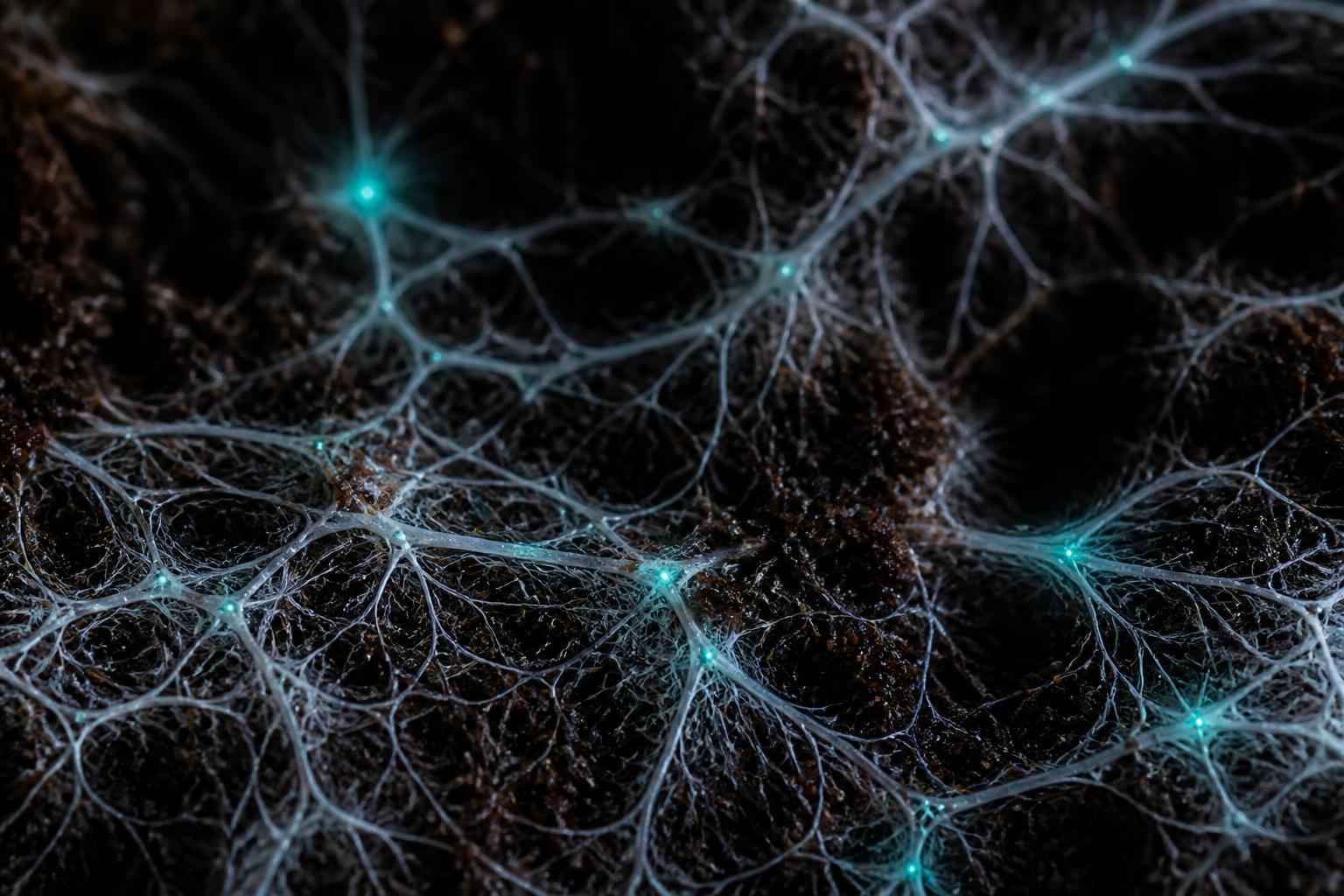
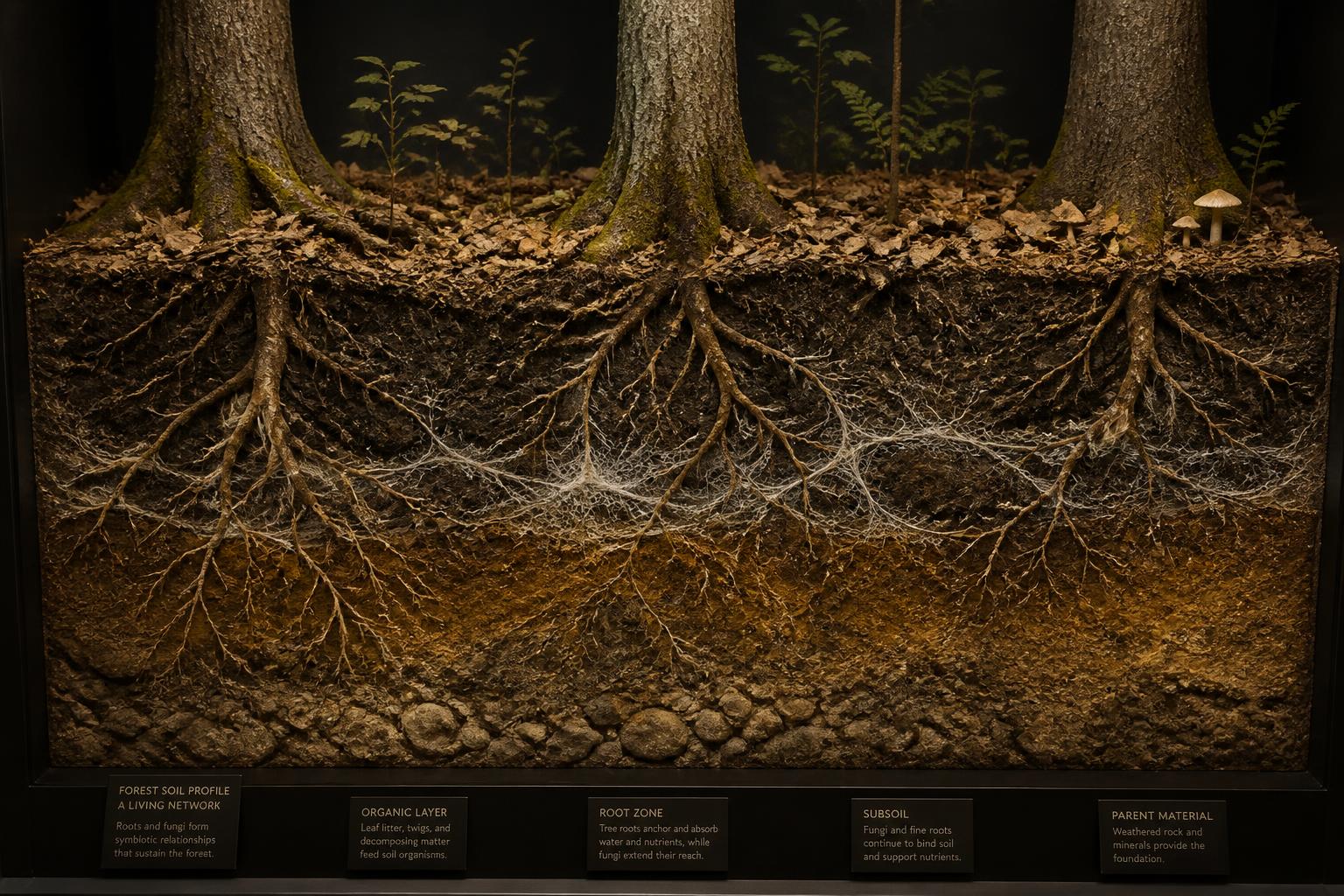
In 1997, Dr. Suzanne Simard of the University of British Columbia published research demonstrating that Douglas fir trees share carbon, water, and chemical signals through underground mycorrhizal fungal networks — networks of remarkable complexity, redundancy, and — by the standards of what was then understood about plants — intentionality.
Subsequent research has documented electrical signaling between plants, volatile organic compound communication across root systems, and distributed resource allocation behaviors that have no adequate explanation outside of networked information exchange.
Understory did not invent this network. We did not design it. We did not patent it, though we looked into this and it raised questions we ultimately decided not to pursue.
We simply asked: what happens if you use it?
- 1. Simard, S.W. et al. (1997). Net transfer of carbon between ectomycorrhizal tree species in the field. Nature 388, 579–582.
- 2. Babikova, Z. et al. (2013). Underground signals carried through common mycelial networks warn neighbouring plants of aphid attack. Ecology Letters 16(7), 835–843.
- 3. Gorzelak, M.A. et al. (2015). Inter-plant communication through mycorrhizal networks mediates complex adaptive behaviour in plant communities. AoB Plants 7, plv050.